Due diligence for charitable giving, tax season regrets, and addressing community needs
Hello from the Morton Community Foundation!
With tax season now behind us and spring in full swing, this is a natural time to reflect, reset, and look ahead. Many of you have recently revisited your charitable giving as part of conversations with your advisors, and we’re grateful for the opportunity to support you along the way. Whether you’ve been giving for years or are just beginning to think more intentionally about your philanthropy, this moment offers a valuable opportunity to build confidence and clarity in your approach.
As always, the MCF team is here to share practical insights and support your charitable goals—especially as economic conditions continue to evolve and community needs remain dynamic.
The Morton Community Foundation (MCF) is proud to announce the distribution of $121,310 in grant funding to 35 local organizations and initiatives as part of its 2026 Community Grant Cycle. READ MORE
Making thoughtful charitable giving decisions can feel overwhelming at times. MCF can help you feel more confident in your philanthropy by offering local insight, strategic guidance, and due diligence support as you evaluate opportunities. READ MORE
Now that tax season has wrapped up, consider reflecting on what worked well—and what you might do differently next year. This is the perfect time to review a few common regrets and simple steps you can take now to improve both the impact and efficiency of your giving going forward. READ MORE
If you are watching the markets closely this spring, you are not alone. It’s more important than ever to stay engaged in philanthropy. The Morton Community Foundation can help you evaluate ways to expand your charitable giving portfolio to include support for the Morton Community Foundation’s mission—helping strengthen the ability to respond to community needs and serve future generations. READ MORE
Thank you for being part of the Morton Community Foundation. It is our honor to work alongside you as you build a charitable plan that reflects your values and makes a lasting difference.
Scott Witzig, Executive Director
Darcy Roecker, Administrative Manager
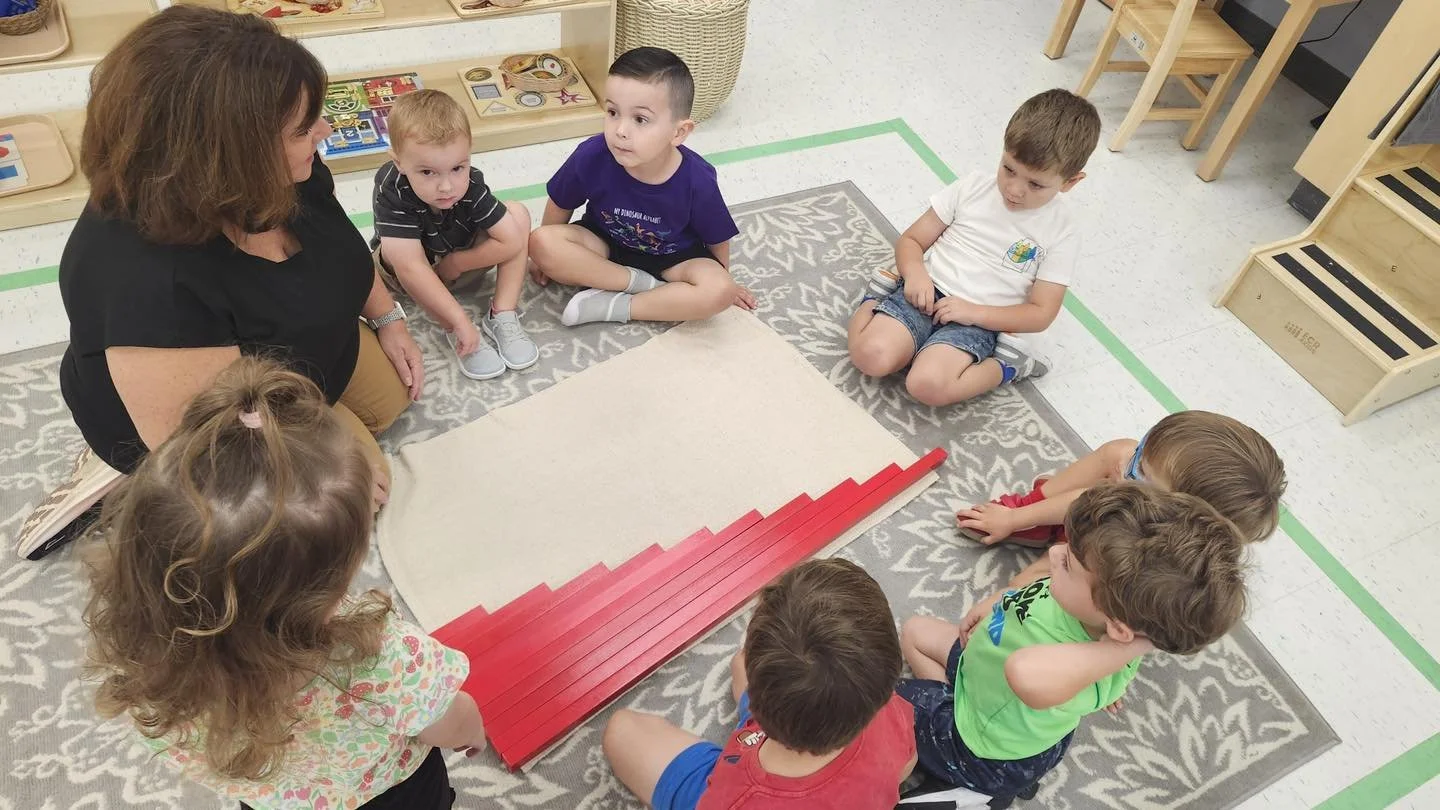
Students at Blessed Sacrament School gather with their teacher on the floor, engaging hands-on with new Montessori learning materials made possible by a $4,588 Morton Community Foundation 2025 Community Grant. What began as a gradual transition quickly blossomed into a full embrace of Montessori learning, fostering independence, curiosity, and confidence—while drawing growing interest from new families throughout the community.
Morton Community Foundation Awards $121,310 in 2026 Community Grants
The Morton Community Foundation (MCF) is proud to announce the distribution of $121,310 in grant funding to 33 local organizations and initiatives as part of its 2026 Community Grant Cycle.
While these Community Grants represent an important and highly visible part of MCF’s work, they are just one piece of a much larger impact. In fact, this year’s Community Grants account for approximately 19% of the Foundation’s total projected grantmaking of $628,550 in 2026.
The remaining grant dollars will be distributed through Donor Advised and Designated Funds, Agency Funds, and Scholarship Funds — each providing support to specific organizations, causes, and students throughout the community.
Powered by Endowment
All of this grantmaking is made possible through the generosity of donors who have established more than 150 endowment funds at MCF, totaling nearly $20 million. These funds are permanently invested, with a portion of the earnings distributed each year to support the long-term needs and opportunities within the Morton area.
This endowment model ensures that gifts made today continue to give back forever — providing a steady and reliable source of funding for local nonprofits, schools, parks, libraries, and other community assets.
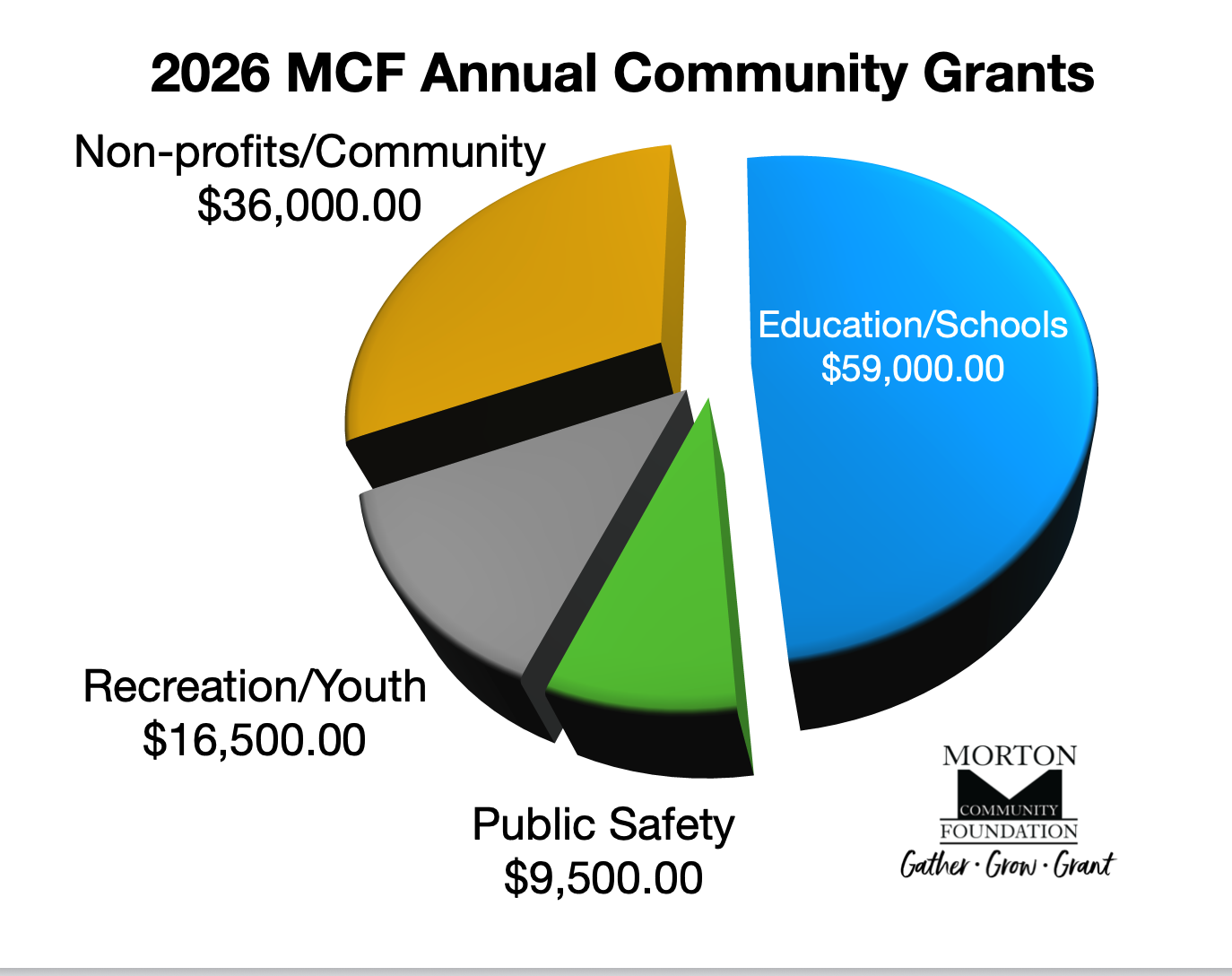
A Balanced Approach to Community Impact
Education & Schools (49%)
Nonprofits & Community Organizations (29%)
Recreation & Youth Programs (14%)
Public Safety (8%)
Nearly half of all Community Grant funding supports education, reinforcing MCF’s commitment to students, classrooms, and learning environments. At the same time, meaningful investments were made in nonprofit organizations, youth programs, and public safety initiatives.
Investing in What Matters Most
Among the 33 grants awarded this year are several projects that will have a lasting and visible impact:
New playground equipment at Lettie Brown Elementary School
Program enhancements at local churches and nonprofit organizations
Bleachers and equipment upgrades for youth sports programs
Expanded access to books and programming through the Morton Public Library
Advanced training and medical equipment for local first responders
In addition to these larger projects, many grants support smaller but important needs such as classroom resources, music and arts programs, and community-based initiatives — ensuring that funding reaches a wide range of organizations and residents.
Part of a Bigger Picture
“Community Grants are often what people see most clearly because they involve an application process and a public announcement,” said MCF Executive Director Scott Witzig. “But they represent just one part of a much broader effort made possible by our donors.”
The majority of MCF’s grantmaking happens quietly and consistently through endowed funds created by individuals, families, businesses, and organizations — all working together to strengthen the Morton community over time.
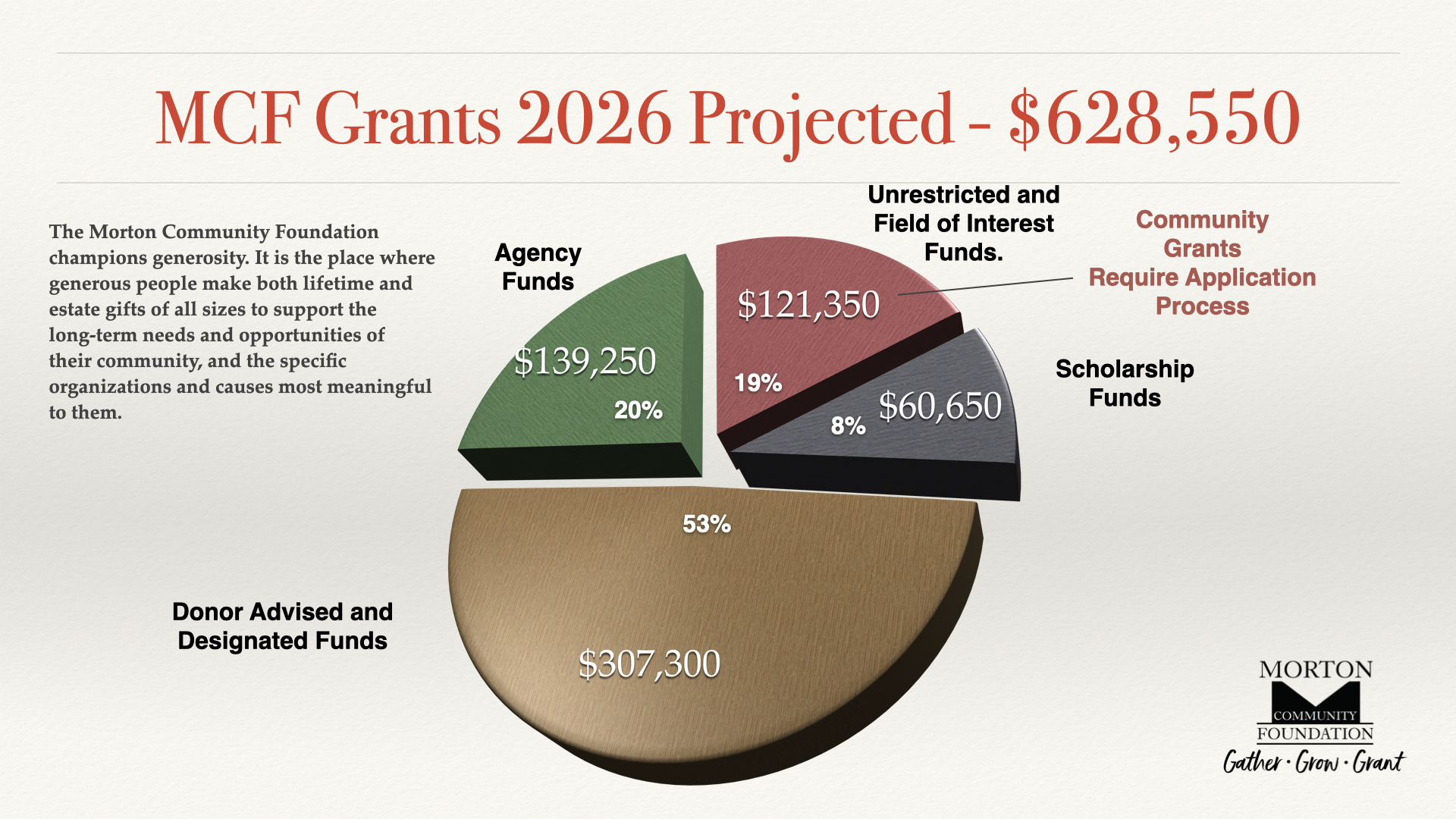
The Bigger Picture
“Ultimately, these 33 grants — and the broader $628,550 in total projected grants for 2026 — represent a community coming together to invest in its future.”
A Community Effort
The grantmaking process includes careful review by both internal and external committees, ensuring that funding decisions reflect thoughtful discussion and multiple perspectives.
Ultimately, these 33 grants — and the broader $628,550 in total projected grants for 2026 — represent a community coming together to invest in its future.
From classrooms and playgrounds to first responders and nonprofit programs, the impact of these grants will be seen and felt throughout Morton for years to come.
For the full listing of 2026 Community Grants, click the button below…

Charitable giving, due diligence, and how the community foundation can help
Many people want to be thoughtful in their charitable giving, but that doesn’t always make the process easy. In fact, one of the most common challenges donors face is simply feeling confident in their decisions. With so many worthy organizations, urgent needs, and compelling opportunities, it can be difficult to know where to start—or how to know if you’re making the biggest possible impact.
If you’ve ever found yourself wondering whether you’re giving to the “right” organizations, you are not alone. This is where the Morton Community Foundation can help.
One of the most valuable roles the Morton Community Foundation plays is serving as a trusted, knowledgeable partner in your philanthropy. Our team works closely with nonprofit organizations across the region and maintains a deep understanding of the issues shaping our community. This allows us to provide more than just options—we can offer context. For example, if you’re interested in supporting a particular cause, we can share insight into how that issue is affecting our community right now, which organizations are actively addressing it, and where additional support could make a meaningful difference.
In addition to offering perspective, the Morton Community Foundation can also assist with due diligence. While many organizations are doing excellent work, it’s natural to want reassurance that your gifts are being used effectively and in alignment with your intentions. Our team can help review organizations’ missions, programs, and governance practices, and provide guidance based on our experience working with nonprofits of all sizes and focus areas. This can be especially helpful if you are considering supporting an organization that is new to you or responding to a timely or urgent need.
For many donors, this combination of insight and due diligence leads to greater confidence—not just in individual gifts, but in their overall approach to philanthropy.
Just as importantly, working with MCF can help you step back and think more strategically about your giving. Rather than approaching each donation as a separate decision, you may find it helpful to consider how your gifts fit together over time. Are there certain causes you’d like to prioritize? Would you like to balance immediate needs with long-term impact? Are there opportunities to involve your family in the process?
These are the types of conversations the Morton Community Foundation is here to support. Whether you prefer to remain hands-on in selecting organizations or would like help narrowing your focus, our team can tailor our approach to fit your preferences and goals.
The result is not a rigid plan, but a more confident and informed path forward.
Philanthropy is personal, and there is no single “right” way to give. But having a trusted partner can make the process feel more manageable—and more meaningful. MCF is honored to work alongside you, helping ensure that your generosity is guided by both your values and a clear understanding of how to make the greatest impact.
Contact us at: email: info@cfmorton.org • phone: 309-291-0434

Tax season debrief: Three common regrets
If you’re like many donors, the weeks leading up to tax deadlines tend to bring charitable giving into sharper focus. You may have finalized contributions, gathered documentation, or had conversations with your CPA about how your philanthropy fits into your overall financial plan.
After the deadline has passed, it’s tempting to move on and not revisit these decisions until later in the year. But the weeks immediately following filing your tax return are actually one of the best times to take a step back and reflect—while the details are still fresh. This is especially important in 2026 because so many tax laws have changed.
If you experienced any surprises this tax season, that’s especially worth discussing. Often, small adjustments made early in the year—rather than in December—can lead to better outcomes both financially and philanthropically.
Here are common regrets and how MCF can help for the 2026 tax year and beyond.
Giving cash instead of appreciated assets
Many donors regret using cash or credit cards to make large donations instead of gifting appreciated assets (such as stocks, mutual funds, or real estate) held for more than one year.
The regret: Selling assets to donate the cash results in paying capital gains tax on the profit.
The better move: By donating the asset directly to your fund at the Morton Community Foundation or to another qualified charity, you may be able to avoid capital gains tax on the appreciation and deduct the full fair market value if you itemize.
Missing out on “bunching” to surpass the standard deduction
The standard deduction was increased under 2017 changes to the tax laws and has stayed high ever since. This can cause missed opportunities for charitable deductions.
The regret: Spreading donations evenly across the years and not exceeding the standard deduction threshold.
The better move: “Bunching” multiple years of donations into a single tax year by using a donor-advised fund at MCF to exceed the standard deduction and claim a tax deduction for that year.
Pro tip: Planning around tax rules is especially important for 2026 and future tax years because not only is the standard deduction still high, but also charitable deductions are now subject to a 0.5% “floor” and a 35% cap. Be sure to talk with your tax advisors early in the year to structure a plan that will work best for you.
Lack of proper documentation
Sadly, many donors fail to keep adequate records, leading to potential deductions being disallowed by the IRS.
The mistake: Failing to get written acknowledgment from the charity for donations over $250, or not having a bank record for smaller cash gifts.
The problem: Without documentation, even genuine donations can be disallowed upon audit.
Honorable mentions
Beyond the “big three,” donors also report regrets such as:
Overlooking IRA Qualified Charitable Distributions (QCDs). Taxpayers 70½ or older forget they can directly donate to charity from their IRAs, which can help satisfy RMD obligations without increasing their taxable income. (Note that changes may be coming that could allow you to use QCDs to fund your donor-advised fund at the Morton Community Foundation. Currently, QCDs can fund other types of funds at the Morton Community Foundation, but not donor-advised funds.)
Donating to non-qualified entities. Giving to organizations that are not 501(c)(3) nonprofits (such as Chambers of Commerce, Rotary Clubs, Veterans membership organizations like American Legion, VFW, etc), meaning that these donations are not tax-deductible. Working with the experienced team at the Morton Community Foundation can help you avoid this pitfall.
Overvaluing non-cash donations. Inflating the value of donated goods (such as clothing or used cars) rather than using their fair market value (thrift store value). This could come back to bite you in an audit!
Overlooking the Illinois Gives Tax Credit, a 25% tax credit for donations to qualified endowment funds at a qualified community foundation (Morton Community Foundation is a qualified CF).
Hoping to avoid tax season remorse next year? Please reach out to the team at MCF. We want to be your first call on all matters of charitable giving. Whether you established a fund at the Morton Community Foundation years ago, recently became a fund holder, or are considering doing so this year, we are here for you!
Contact us at: email: info@cfmorton.org • phone: 309-291-0434

Deepening your impact in times of need
Many people are not fully aware of the extent to which charitable organizations shape everyday life in our communities. From social services to education, healthcare, and the arts, nonprofits touch nearly every aspect of quality of life. Americans give hundreds of billions of dollars to charity each year, supporting roughly 1.9 million organizations nationwide. These organizations often become even more essential during periods of economic uncertainty, when demand for services tends to rise just as resources can feel more constrained.
That dynamic is especially relevant as many are watching the markets closely this spring. Even the possibility of a downturn can influence financial decisions, including charitable giving. It is natural to feel more cautious. At the same time, history shows that community needs often increase during challenging economic periods—making it all the more important to stay engaged in philanthropy.
As you think about your charitable giving this year, this may be a good moment to step back and consider not only where you give, but also how you structure your giving for long-term impact. In particular, it is important for donors and fund holders to consider expanding their portfolio of giving to include giving to the Morton Community Foundation itself.
This can take several forms, each of which plays a meaningful role.
Operating support
Some donors choose to support the Morton Community Foundation’s operations across generations. This type of support helps ensure that the foundation can continue serving as a trusted resource—connecting donors to causes, responding to emerging needs, and stewarding charitable funds with care and expertise well into the future. It is an investment not only in today’s giving, but also in the long-term strength of the philanthropic infrastructure in our community.
Support for grant programs
Other donors focus on increasing the Morton Community Foundation’s grantmaking resources so that more money can flow from the Morton Community Foundation to nonprofits that are helping those in need, especially when times are tough. Contributions to unrestricted or broadly focused funds allow the Morton Community Foundation to respond quickly and thoughtfully to the most pressing challenges facing our region. During periods of economic strain, this flexibility can be especially powerful, enabling support to reach the people and organizations that need it most, at the moment it matters most.
A hybrid approach
In many cases, donors adopt a dual strategy—continuing to support favorite organizations directly or through the Morton Community Foundation’s grant programs while also allocating a portion of their giving to the Morton Community Foundation itself. This approach can help balance personal philanthropic interests with broader community impact, creating a more resilient and adaptable giving strategy.
The Morton Community Foundation’s unique role is what makes any or all of these approaches so effective. As a perpetual institution governed by a local board of directors, the Morton Community Foundation is designed to serve the community not just today, but across generations. Our team maintains deep knowledge of local needs, works closely with nonprofit partners, and is positioned to deploy resources where they can do the greatest good over time.
Especially in moments when the future feels uncertain, expanding your portfolio of giving in this way can provide an added layer of confidence. You can continue supporting the causes you care about while also strengthening the Morton Community Foundation’s ability to lead, respond, and make a difference—now and in the years ahead.
We are honored to work alongside you as you consider how your philanthropy can support both immediate needs and lasting impact for our entire community.
Contact us at: email: info@cfmorton.org • phone: 309-291-0434
The Morton Community Foundation is honored to serve as a resource and sounding board as you build your charitable plans and pursue your philanthropic objectives for making a difference in the community. This newsletter is provided for informational purposes only. It is not intended as legal, accounting, or financial planning advice. Please consult your tax or legal advisor to learn how this information might apply to your own situation.